Trying to decide between Bethel and Newtown can feel like comparing two great options without a clear winner. You want the right mix of price, schools, commute, and day-to-day lifestyle, and you don’t want to miss a detail that matters. In this guide, you’ll get a clear, side-by-side look using current public data and practical local context so you can move forward with confidence. Let’s dive in.
Quick snapshot: how they differ
If you start with the big picture, the contrasts come into focus.
- Population and scale. Bethel is smaller at about 21,490 residents, while Newtown is larger at roughly 28,029. You’ll notice the difference in town size, services, and neighborhood feel. These figures come from recent estimates in the Census QuickFacts resource for each town. You can review town-level figures directly in the Census QuickFacts tool for Bethel and surrounding towns to confirm the latest numbers and context in one place.
- Income and housing mix. Median household income is higher in Newtown (about $148,000) than in Bethel (about $115,000). Owner occupancy is also higher in Newtown, around 90 percent compared with roughly 79 percent in Bethel. These indicators suggest Newtown skews more owner-occupied and residential, while Bethel has a somewhat more mixed rental-to-owner balance. See the comparative town data in the Census QuickFacts dashboard for details.
- Commute times. Average commute times are similar. The American Community Survey shows a mean travel time to work of about 31.3 minutes for Bethel and about 32.6 minutes for Newtown, which reflects a typical regional commute across a variety of jobs and destinations.
- Market snapshot prices. As of a January 2026 market snapshot, Bethel’s median sale price sits around $500,000, while Newtown’s is around $782,500. Month-to-month swings can occur, but the gap helps set realistic budget expectations.
For a one-stop view of population, income, and housing tenure, explore the Census QuickFacts page that aggregates recent ACS data for Bethel and other nearby towns. It’s a helpful baseline when you start comparing locations.
Lifestyle and downtown walkability
Bethel: compact, lively, and rail-adjacent
If you want a true small-town center, Bethel delivers. Its compact downtown around Greenwood Avenue and Main Street clusters shops, cafes, services, and town events close to the Metro-North station. A sample address near downtown posts a Walk Score in the 70s, which signals that errands can be done on foot in this core area. You can test a specific address with this sample near Main Street using the Walk Score tool for a feel of what “very walkable” looks like in Bethel’s center.
Bethel also leans into community programming. From food-truck nights to seasonal pop-ups, you’ll often find town-backed events that animate the center. Local news often highlights these happenings; for example, community updates reported by Patch spotlight how the town invests in downtown programming.
Newtown: classic New England center, wider spread
Newtown is larger and more suburban-rural in character. You’ll find a classic Main Street experience and the Sandy Hook village area with shops and restaurants, plus civic and arts venues. Outside these centers, the town’s spread-out geography means most addresses are car dependent for daily errands. If you love a quiet setting and larger lots, that trade-off can be a plus.
The takeaway: if you want a high probability of doing everyday errands on foot from your home, you’ll likely focus on Bethel’s downtown pockets. If you want a charming center to visit but plan to drive for most errands, Newtown fits that pattern.
Schools and family considerations
Both districts perform above various statewide baselines, but they differ in specific outcomes that matter to many families. The most reliable way to compare is to review each district’s official Edsight report.
- Bethel Public Schools. The district’s recent Edsight reporting shows four-year graduation around 94.7 percent and district performance indices in the high 60s to low 70s across subjects, with detailed subgroup data available. You can review the full Bethel profile and indicators in the official Edsight report for Bethel.
- Newtown Public Schools. Newtown’s Edsight report shows slightly higher All-Students performance indices in English Language Arts and Math, and a higher reported graduation rate of about 97.2 percent for the same cohort. You can review the full Newtown profile and indicators in the official Edsight report for Newtown.
If you like to supplement state reports with third-party summaries and parent reviews, independent rankings often place Newtown higher in statewide comparisons. For example, Niche’s profile for Newtown offers a snapshot of comparative strengths. Always weigh these alongside Edsight’s primary-source data.
A smart approach is to list your priorities first. If maximizing district rankings and postsecondary-readiness indicators sits at the top of your list, Newtown often stands out. If you want solid performance with more purchasing power, Bethel’s combination of metrics and affordability can be compelling. For school assignments and feeder patterns, check each district’s official site and current attendance zones when you narrow to specific neighborhoods.
Housing types and price bands
What you can expect in Bethel
Bethel’s housing stock includes classic colonials, capes, and ranches, plus some condos and multifamily options closer to downtown and the station. The town’s planning and conditions documents highlight a mix of traditional single-family neighborhoods with more compact lots near the core. You can get historical context about housing and neighborhood patterns in the Town of Bethel planning trends report.
Price-wise, recent market patterns suggest:
- Entry-level. You may find a limited number of smaller or updated 2–3 bedroom homes or condos under about $400,000 to $450,000, but inventory is tight and condition or location trade-offs are common.
- Mid-range. Many Bethel buyers land between about $450,000 and $750,000 depending on size, updates, and proximity to town.
- Upper tier. Bethel also has higher-end properties above $1 million, though its top end is less common than in some neighboring markets.
For context, the Census’ multi-year estimate of median owner-occupied home values in Bethel is around $426,500. That figure uses a different methodology than current sales medians, so it’s best read as a historical baseline rather than a live market price.
What you can expect in Newtown
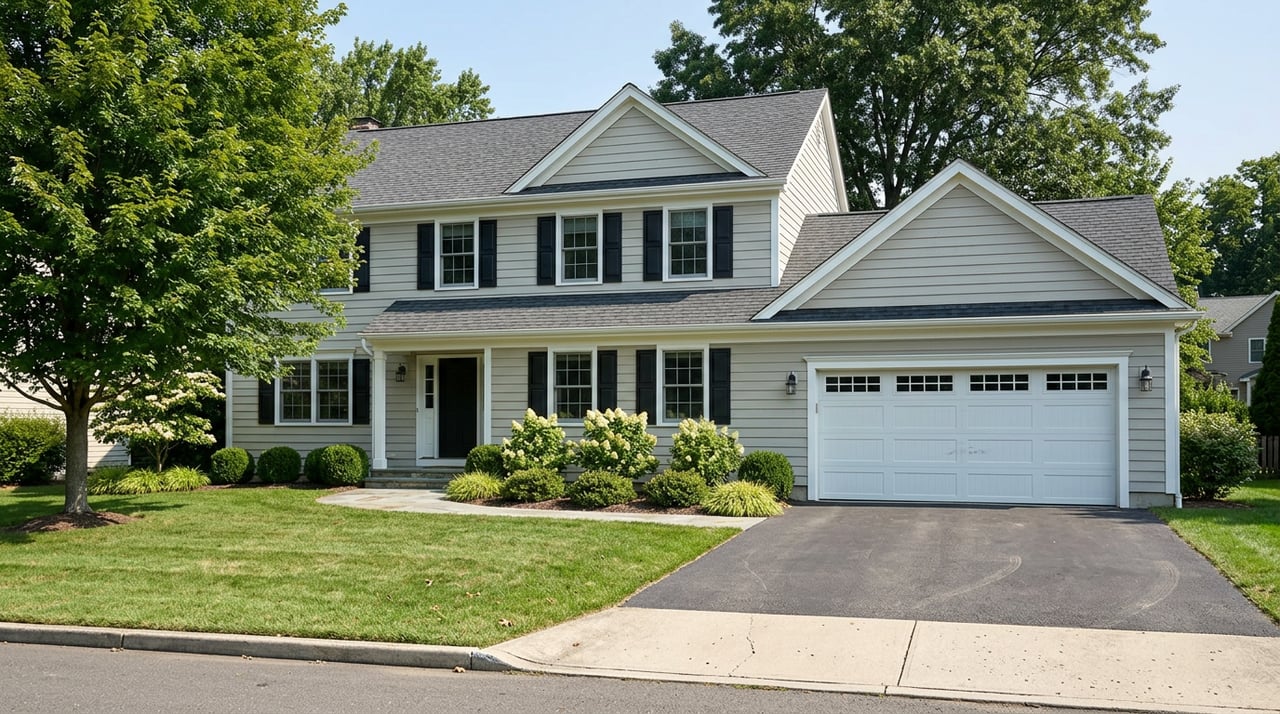
Newtown skews toward larger lots and a more rural-suburban setting, and you will see more country parcels and the occasional farm or hobby farm property in certain pockets. Detached single-family homes dominate.
Recent price guidance looks like this:
- Entry-level. Traditional single-family options under $500,000 are scarce due to the higher townwide median. Expect to start closer to the mid-$500,000s for many homes, with exceptions based on size, location, and condition.
- Mid-range. A large share of Newtown buyers shop in the $700,000 to $1 million range, with lot size and updates driving spread.
- Upper tier. Newtown’s larger parcels often push the top end higher than Bethel, with many properties well above $1 million.
Owner occupancy runs near 90 percent in Newtown, which is consistent with its more settled, single-family character. As with Bethel, the Census’ multi-year median owner value for Newtown is lower than current sales medians because it reflects a longer window of owner-reported values rather than closed sale prices.
Commuting and transportation
Rail access: a key separator
If daily rail matters, Bethel has a practical edge. The Bethel Metro-North station on the Danbury Branch offers weekday service with connections to major job centers. You can confirm train frequency and transfer points on the official Bethel Station page from Metro-North.
Newtown does not have a Metro-North station. Rail riders typically drive to Bethel or Danbury stations, or to parking at larger hubs like South Norwalk. For exact timetables and transfer options across the Danbury Branch, check Metro-North’s Danbury schedule page.
Local bus service through HARTransit supports regional trips and connections within the Danbury–Bethel–Newtown area, but it is not a substitute for intercity rail. Learn more about routes and services in the HARTransit overview.
Driving, highways, and timing
Both towns sit within reach of the I-84 corridor through Danbury, with local state routes handling much of the daily flow. Newtown’s larger footprint can add a few minutes to highway access depending on the neighborhood. As a baseline, the ACS shows average commute times of about 31 to 33 minutes across both towns, but your actual door-to-door time will depend on where you live and work.
Which town fits you? A quick test
Use these simple checks to point you in the right direction:
- If your target budget is at or under about $500,000 and you want a compact downtown with walkable pockets or easier rail access, lean Bethel.
- If higher district rankings, larger lots, and a more rural-suburban feel top your list, and your budget is typically $700,000 or more, lean Newtown.
- If daily NYC rail is mandatory, Bethel’s in-town station provides a practical advantage. If you are comfortable driving to a station and want more land, Newtown stays in the mix.
- If you want everyday walkability to coffee, dining, and errands, test specific addresses. Bethel’s downtown addresses usually post stronger Walk Scores than most residential pockets in Newtown’s wider footprint.
- If schools are the top factor, compare the Edsight PDFs for both districts, then pair that with your budget. Newtown often rates higher in third-party roundups, while Bethel pairs solid metrics with more affordability.
How we help you choose with confidence
Choosing between two good options is where a trusted local advisor makes the difference. As a boutique, community-rooted team based in Newtown, we pair hyperlocal insight with full-service support. You get collaborative guidance from advisors who study neighborhood trends, a curated vendor network to simplify pre- and post-close needs, and white-glove concierge support through American Home Benefit.
When you are ready to compare homes street by street, school assignments by address, or door-to-door commute scenarios, we will build a plan that fits your goals and timing. Start a conversation with the team at Around Town Real Estate and let’s map your next move.
FAQs
What are the biggest differences between Bethel and Newtown?
- Newtown is larger with higher median income and owner occupancy, while Bethel is smaller with a more walkable downtown core and in-town rail access. Prices also trend lower in Bethel based on a January 2026 market snapshot.
Is Bethel or Newtown better for commuting by train to NYC?
- Bethel. It has a Metro-North station on the Danbury Branch with weekday service, while Newtown riders drive to nearby stations. Check the Bethel Station page and Danbury Branch schedules for current times.
How do the school districts compare on official metrics?
- Both perform above many statewide baselines. Recent Edsight data shows Bethel’s four-year graduation around 94.7 percent and Newtown around 97.2 percent, with Newtown posting slightly higher performance indices in some subjects. Review each district’s Edsight PDF for full details.
Where will my home budget go further right now?
- Bethel. As of a January 2026 snapshot, Bethel’s median sale price is around $500,000 versus roughly $782,500 in Newtown, though availability and monthly swings can shift options.
Which town is more walkable day to day?
- Bethel’s downtown pockets near Greenwood Avenue and Main Street are often very walkable, with a sample address scoring in the 70s on Walk Score; most Newtown addresses are more car dependent outside its Main Street and Sandy Hook centers.
What types of homes are most common in each town?
- Both towns are dominated by detached single-family homes like colonials, capes, and ranches; Bethel adds more condos and multifamily options near downtown, while Newtown features larger lots and more rural properties in some areas.
How reliable are the census and pricing numbers in this guide?
- Census and ACS figures reflect multi-year estimates that are ideal for background on income, commute times, and owner occupancy, while January 2026 pricing is a current-period snapshot that can shift month to month.
Are there public transit options besides the train?
- Yes. HARTransit provides local bus routes and paratransit in the Danbury–Bethel–Newtown area, useful for regional trips, though it is not a substitute for intercity rail.
Links and sources for deeper reading:
- Review town-level demographics and housing indicators in the Census QuickFacts tool: Census QuickFacts
- Check Bethel’s district performance: Bethel Public Schools Edsight report
- Check Newtown’s district performance: Newtown Public Schools Edsight report
- See a sample Walk Score near Bethel’s center: Walk Score for 40 Main St, Bethel
- Explore Bethel station info: Metro-North Bethel Station
- View Danbury Branch schedules: Metro-North Danbury schedules
- Learn about regional buses: HARTransit overview
- Read local event coverage: Bethel community updates on Patch
- Town planning context: Bethel planning conditions and trends
- Independent district snapshot: Niche profile for Newtown Public Schools